The Story of Molela Clay Work: Sacred Origin & Living Legend
The sacred story of Molela clay work: the legend of blind potter Andhkumar, divine vision of Devnarayan, and an unbroken 800-year tribal terracotta tradition.
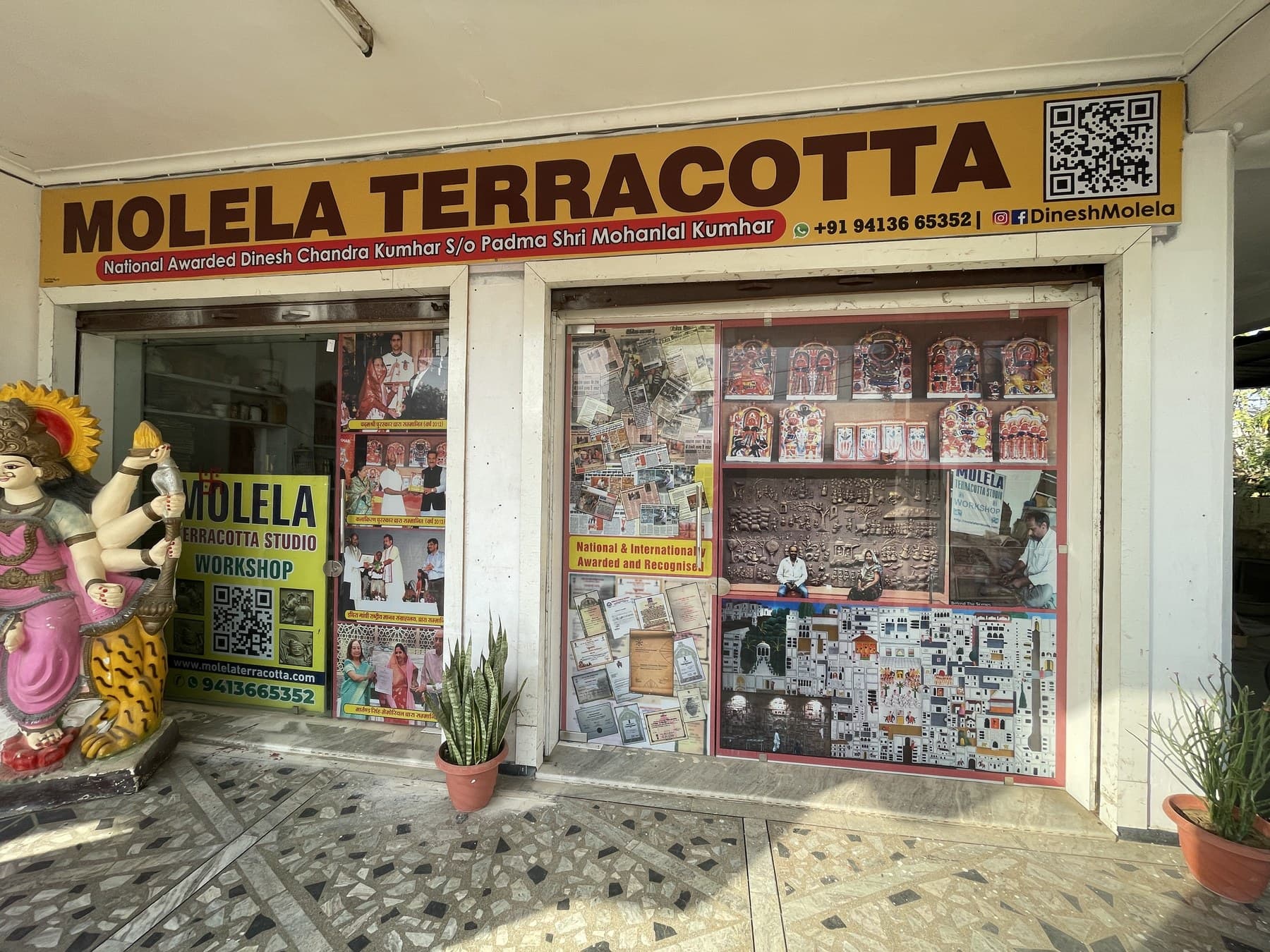
The Sacred Earth: Where Clay Meets Devotion
“Pottery has been called the lyrics of handicraft through which man has given an expression to his creative urge... But it is the association of religion with this very humble object that has given it a deeper significance and wider dimension.”
The story of Molela clay work begins along the serene banks of the sacred Banas River in the Rajsamand district of southern Rajasthan, just 11 kilometres from the temple town of Nathdwara and 45 kilometres north of Udaipur. For more than eight centuries, this tranquil village has been the exclusive cradle of a hollow-relief terracotta tradition found nowhere else in the world.
Unlike decorative pottery created purely for aesthetic pleasure or domestic utility, every plaque crafted in Molela was originally forged as a sacred conduit between humanity and the divine. For generations of rural and tribal families across western India, these clay plaques are not mere ornaments — they are the living presence of their guardian deities, consecrated in village shrines (devras) to protect cattle, heal ailments, and bring fertility to the soil (documented in our traditional deity plaques gallery).
The Sacred Legend: Andhkumar the Blind Potter & Lord Devnarayan
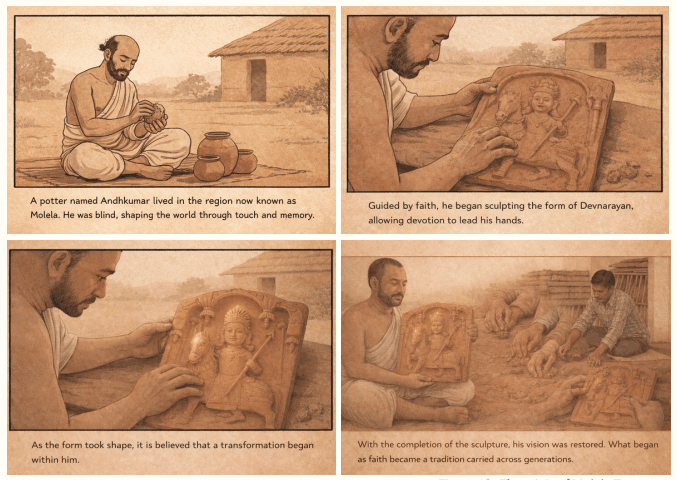
The oral history of Molela is anchored by an 800-year-old miraculous legend passed down through twenty-seven generations of Kumhar artisans. Centuries ago, in the early era of the village, a humble potter named Andhkumar was stricken with total blindness. Plunged into darkness, he could no longer sculpt detailed forms, relying solely on touch and memory to fashion basic water pots to feed his family.
In his despair, Andhkumar experienced a life-altering vision. The equestrian folk deity Lord Devnarayan (revered as Dharmraj Ji, the divine protector of truth and pastoral livelihoods) appeared before him in a vivid dream, seated upon a celestial steed. The deity commanded: "Arise, go to the banks of the Banas River. Gather its sacred red clay, sculpt my likeness onto a flat plaque, and establish it in the village shrine."
Weeping, Andhkumar answered: "O Lord, my eyes are shrouded in darkness. How can hands that cannot see shape the divine countenance of God?" Devnarayan smiled and replied: "Awake at dawn. Let your faith guide your hands, and your vision shall return."
The Divine Miracle: Restoration of Sight & Birth of a Tradition
At daybreak, Andhkumar walked by faith to the riverbank. Kneeling in the Banas mud, he allowed devotion to guide his fingers. As he kneaded the clay and raised the contours of Devnarayan mounted upon his horse, a profound spiritual transformation swept through his being. As his fingers smoothed the final details of the deity’s face and crown, light broke through the darkness — his eyesight was miraculously and completely restored.
Overjoyed, the potter presented the radiant terracotta idol to the village elders and tribal priests. They consecrated the plaque within the local shrine amidst chants and devotional music. From that miraculous dawn, Andhkumar’s lineage vowed to never abandon the sacred art, giving birth to the living tradition of Molela terracotta.
The Sacred Earth & Secret Recipe: Banas Clay and Donkey Dung
The physical survival of a Molela terracotta plaque begins with the earth itself. Artisans harvest alluvial silt and clay (mitti) deposited by the seasonal floods of the Banas River and dry riverbed ponds. This clay possesses exceptional plasticity and a fine mineral grain.
However, pure clay would crack or explode in the kiln when sculpted into large, thick relief panels. The ancient secret of Molela lies in mixing the clay with *donkey dung (leed or gadhe ki leed)* in precise, time-tested ratios. The mixture is soaked in water for six to seven hours and then vigorously kneaded like dough by foot and hand.
The fibrous donkey dung serves an indispensable scientific purpose: during kiln firing, the organic fibres burn away, creating micro-channels that allow internal gases and moisture to escape without building pressure. This gives the terracotta exceptional tensile strength, thermal resistance, and prevents warping during high-temperature firing.
Pure Hand-Sculpting: The Bhaladi, the Pindi, and No Moulds
While pottery across the world relies on wheels or casting moulds (saancha), authentic Molela clay work is crafted 100% by hand. The process remains virtually unchanged since Andhkumar’s era:
- The Flat Slab Base: The potter beats a lump of prepared clay onto the sandy workshop floor using a rounded wooden mallet called a pindi, shaping a flat rectangular slab that forms the back canvas.
- The Bhaladi Sculpting Tool: Using a single, simple handmade chisel-scraper carved from flat bamboo called the bhaladi (or bhaldi), the artisan outlines the figures and carves intricate facial details, jewellery, weapons, and ornate borders.
- Hollow-Relief Construction: Rather than placing solid clay figures onto the slab, the artisan hollows out the backs of all raised figures. This hollow construction ensures uniform drying and prevents cracking in the kiln.
- Shade Drying: Completed plaques are dried in shaded, well-ventilated rooms for 4 to 5 days, avoiding direct sunlight that could cause uneven contraction.
- Indigenous Kiln Firing: The plaques are stacked inside an open-air pit kiln called a bhatti, layered with cow dung cakes, wood, and rice husk, and fired at temperatures between 800°C and 900°C.
The Sacred Pilgrimage: The Bhopa and the Devra Tradition
What distinguishes the story of Molela terracotta is the sacred socio-religious bond between the Hindu Kumhar potters and the indigenous tribal communities of western India — including the Bhil, Gujjar, Meena, Rebari, and Garasia peoples.
Every year during the auspicious winter month of Magha (January–February), a ritual pilgrimage unfolds. Tribal devotees, led by their village priest-shaman called the Bhopa, travel on foot across hundreds of kilometres from Rajasthan, Gujarat, and Madhya Pradesh to Molela.
In the potter’s open courtyard, the Bhopa enters a spiritual trance (bhaav), communicating directly with the ancestral spirits to select the right deity plaque. Offerings of coconuts, incense, and vermilion are made to awaken the clay. Once accepted, the sacred plaque is tied with sanctified cords and hoisted onto the devotees’ heads. Throughout the arduous return journey back to their forest villages, the plaque must never touch the ground until it is installed in the village shrine (devra) during the midnight Devra Pratishtha ceremony.
The Sacred Pantheon: Gods Handcrafted in Living Clay
Unlike classical temple stone carvings that celebrate canonised pantheons, Molela terracotta plaques immortalise the living folk deities, tribal protectors, and local heroes of rural India. Each plaque is hand-built with deep iconographical significance:
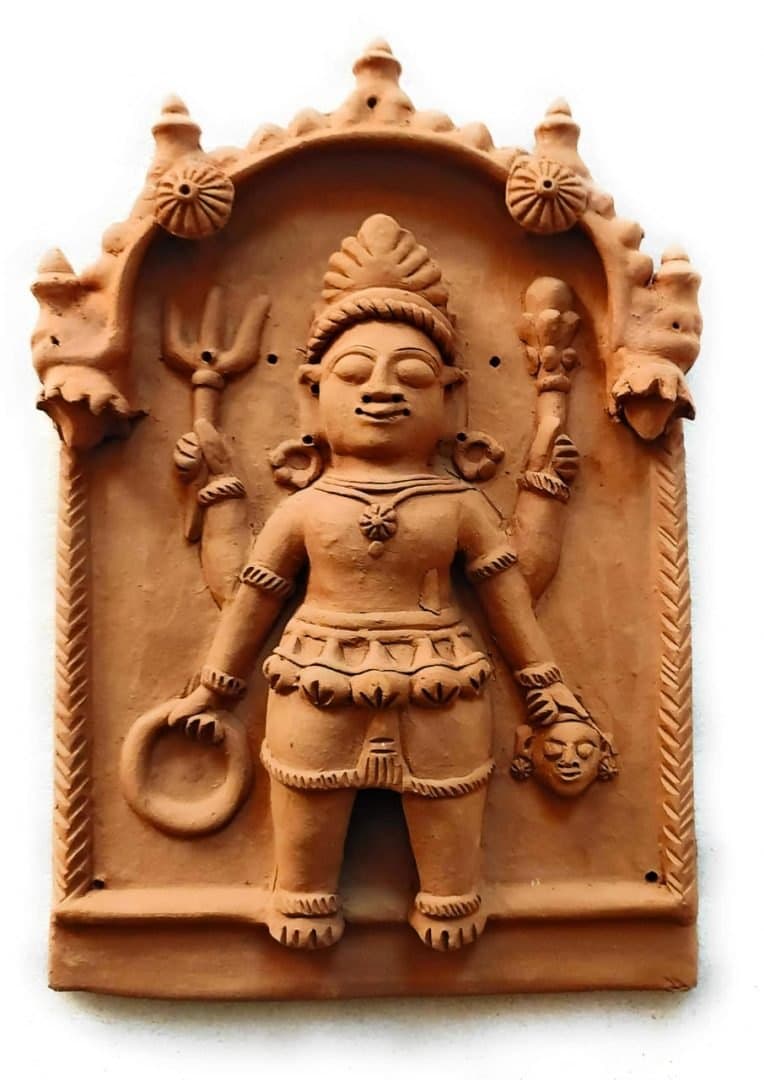
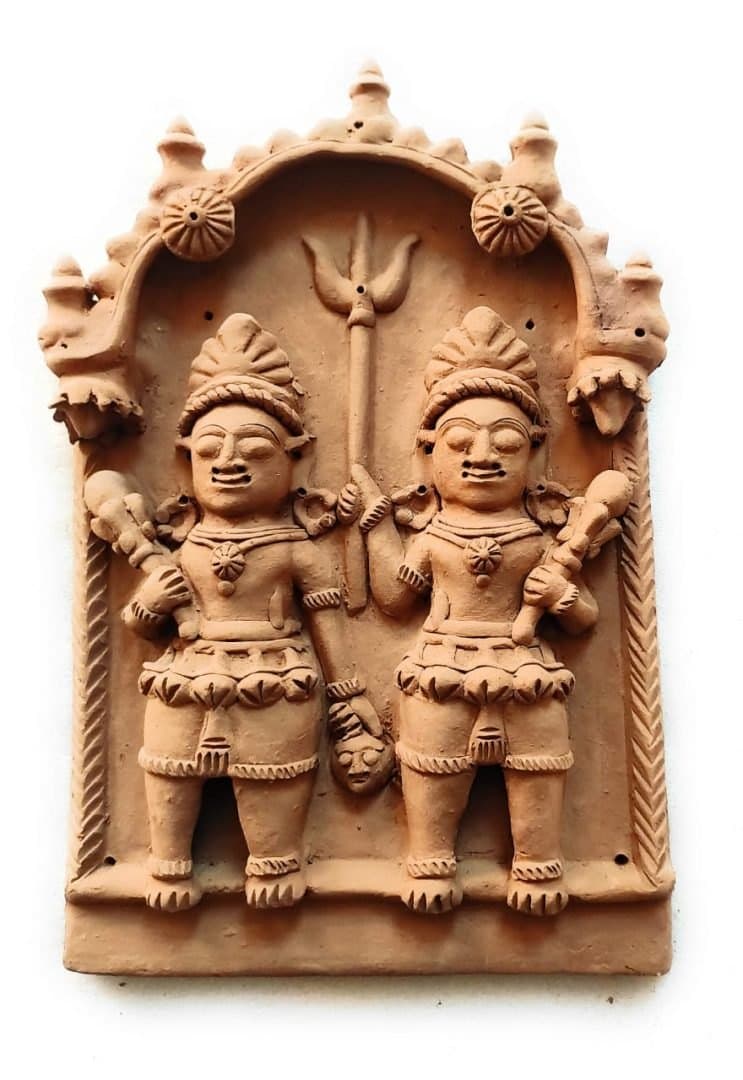
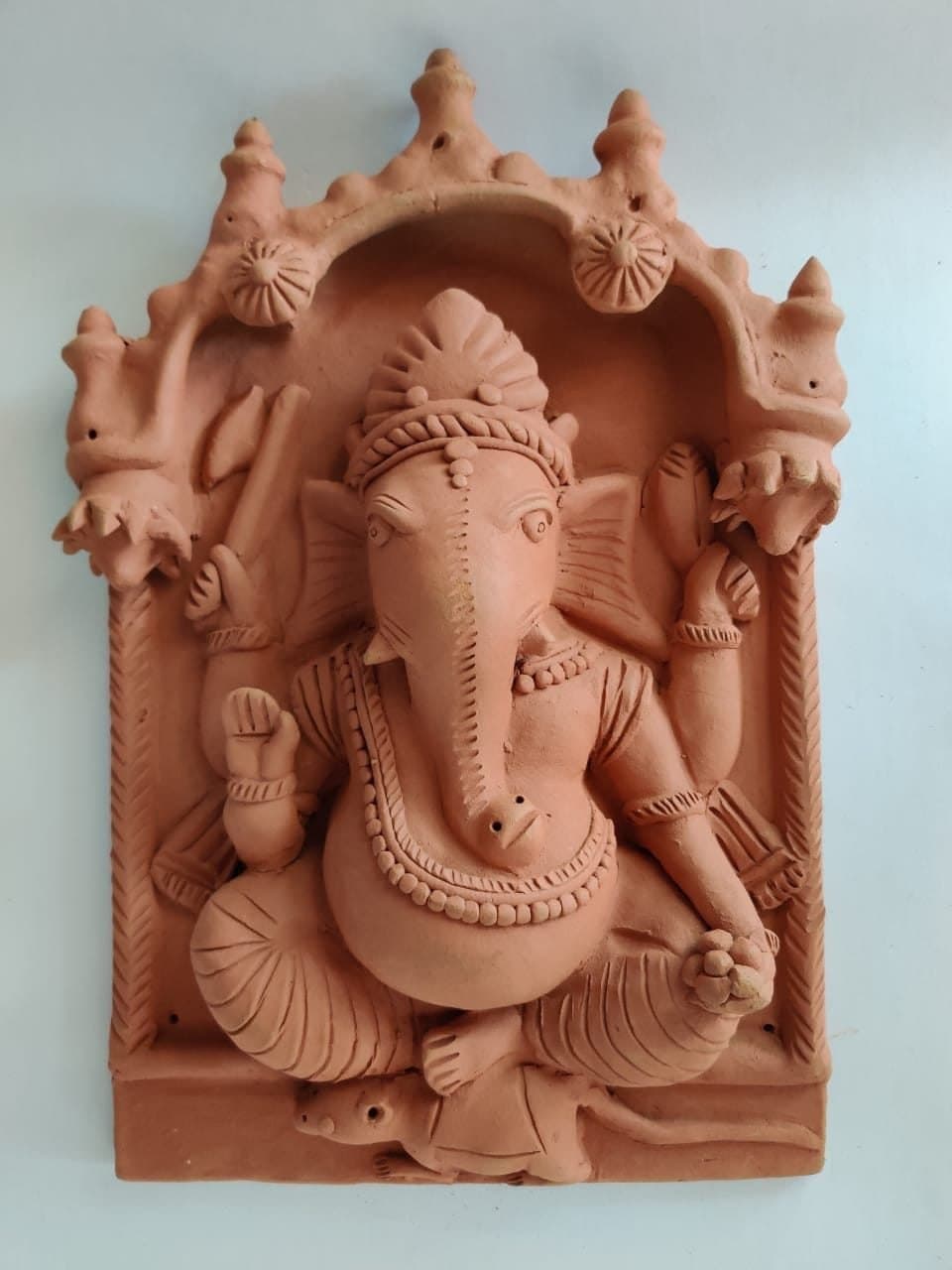
- Kala & Gora Bhairav: The iconic twin guardian deities — Kala (Black) Bhairav with his trishul, sword, bowl of blood, and faithful dog companion; and Gora (Fair) Bhairav, the benevolent protector against diseases, evil eyes, and adversity.
- Dharmraj Ji: The equestrian deity seated upon a decorated steed, venerated across pastoral communities for safeguarding cattle, ensuring bountiful harvests, and dispensing justice.
- Chamunda Mata & Durga: The fierce mother goddess sculpted riding a lion, brandishing ceremonial weapons and triumphing over demonic forces to protect village borders.
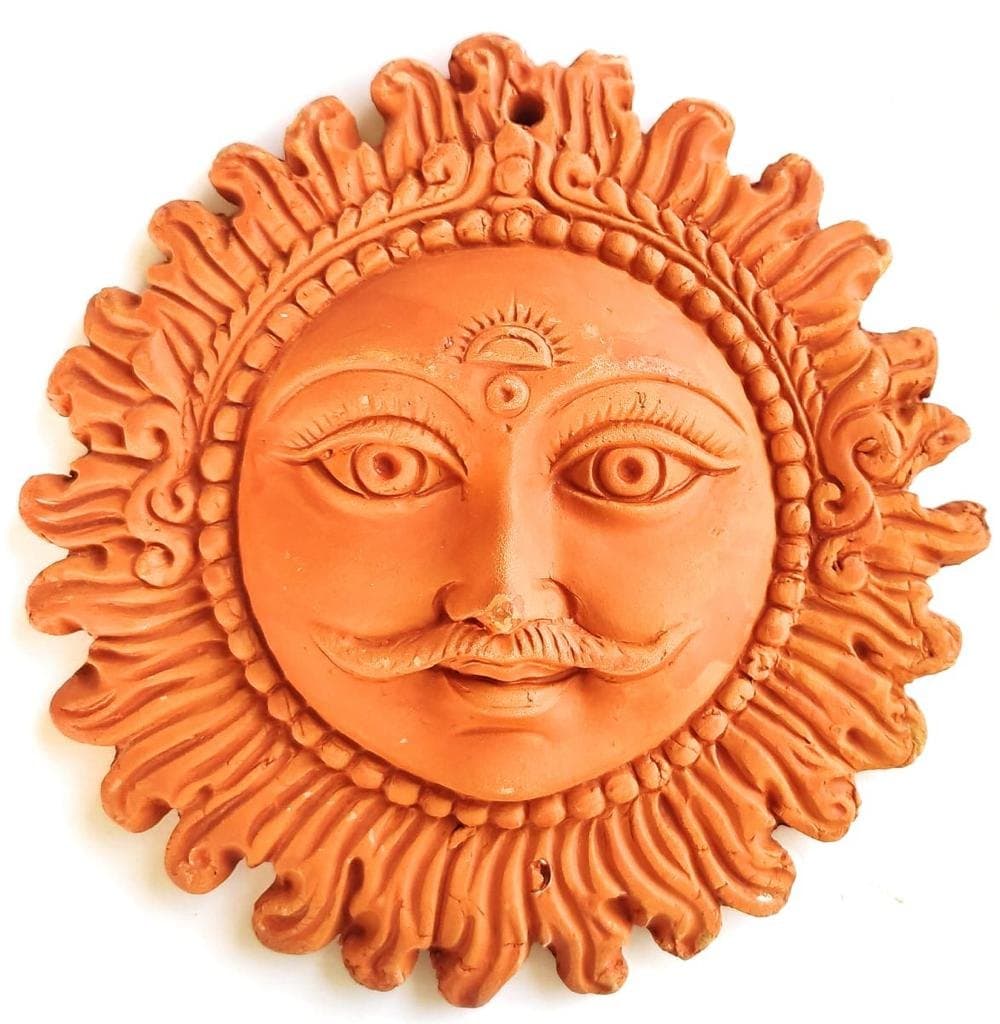
- Surya Dev (The Sun Lord): Radiant solar medallions featuring flaming rays and floral borders, installed at home entrances to bestow health, vitality, and auspicious light.
- Nag Devta (The Serpent Deity): Sacred coiled cobra plaques worshipped to protect pastoral families, domestic livestock, and village water wells from venomous snakes.
1981: The Modern Renaissance & Secular Murals
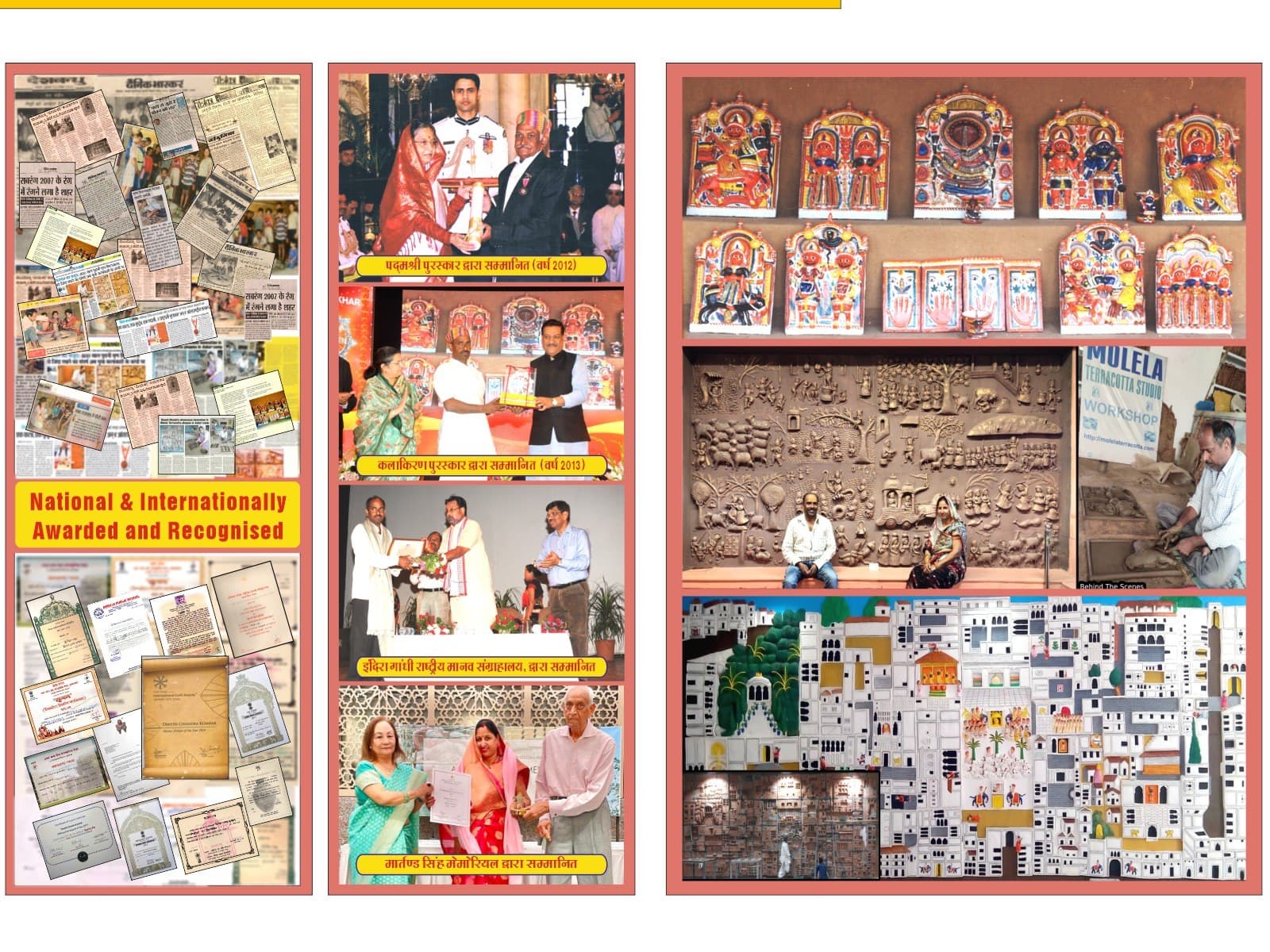
For hundreds of years, Molela clay work remained an exclusively religious votive art. A pivotal turning point arrived in 1981 at the landmark National Aditi Festival in New Delhi. Master craftsman Padmashree Mohan Lal Kumhar, alongside fellow artisans, began translating everyday rural folklore — village wells, wedding processions, camel caravans, and harvest dances — into monumental multi-tile terracotta wall murals.
This marked the birth of contemporary Molela architectural terracotta. Granted Geographical Indication (GI Tag No. 67) for its unique geographical origin and technique, Molela terracotta entered premier museums, five-star heritage hotels, international airports, and private architectural residences across the globe.
Today, in Molela village, National Awardee Dinesh Chandra Kumhar, Kailash Devi, and their family carry forward this 800-year-old lineage — handcrafting sacred votive plaques for tribal pilgrims every winter, executing monumental architectural installations worldwide, and offering ready collections through our online shop, wall decor tiles, and figure galleries.
Frequently Asked Questions
Questions & Answers about Molela Clay Work
Key insights into the sacred origin, traditional techniques, and cultural significance of Molela terracotta.
What is the origin story of Molela clay work?
Molela clay work originated over 800 years ago in Molela village, Rajasthan. According to oral history, a blind potter named Andhkumar was visited in a dream by Lord Devnarayan (Dharmraj Ji), who commanded him to sculpt a sacred clay plaque. Guided by faith, Andhkumar sculpted the deity from Banas river clay, and upon its completion, his eyesight was miraculously restored. This miracle gave birth to an unbroken 27-generation terracotta relief tradition.
Who was the blind potter in the legend of Molela?
The blind potter was Andhkumar, a humble craftsman from the Kumhar community of Molela. Despite losing his vision, his deep devotion and faith enabled him to hand-sculpt the very first terracotta relief plaque of Lord Devnarayan, after which his vision was restored.
Why is donkey dung (leed) mixed with Molela clay?
Donkey dung (leed)* contains natural organic fibres that burn away during kiln firing at 800°C–900°C. This creates micro-porous channels throughout the clay, allowing steam and gases to escape safely without cracking or warping the hollow-relief plaques.
What tools are used to create Molela terracotta plaques?
Molela clay work is 100% hand-crafted without pottery wheels or casting moulds. The only tools used are a flat wooden mallet called a pindi (to beat the clay into a flat slab) and a handmade flat bamboo chisel-knife called a bhaladi or bhaldi (used to carve and raise intricate hollow relief forms).
What is the Bhopa tribal pilgrimage in Molela?
The Bhopa is the village priest and shaman of indigenous tribal communities (Bhil, Gujjar, Meena, Rebari, Garasia). Every winter in the month of Magha (January–February), Bhopas travel hundreds of kilometres to Molela, enter a spiritual trance (bhaav) to select consecrated deity plaques, and carry them on their heads back to their forest shrines (devras) without ever letting them touch the ground.
How did Molela terracotta evolve from temple plaques to modern wall murals?
A key turning point was the 1981 National Aditi Festival in New Delhi, where master artists like Padmashree Mohan Lal Kumhar began sculpting secular village scenes, folk celebrations, and nature motifs. This expanded the craft from votive temple plaques into world-renowned architectural murals, earning Geographical Indication (GI Tag No. 67).
Want a piece in this style?
Every plaque and mural is made to order in the size you need. Send a reference or a wall measurement and we will quote for it.